 Custom Motorcycles Baggers, Choppers, Cruisers, Street Bikes, Trikes, Oldskool Or Newskool Motorcycles
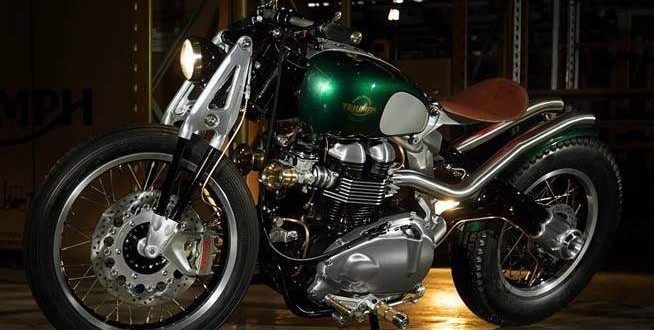
View Triumph Factory Custom TFC1: The Bobber Reworked from the Frame Up Photo Gallery
Triumph Factory Custom’s TFC1, known simply as The Bobber, takes the familiar Bonneville-based custom in a far more technical direction than its name suggests. The low solo-seat profile and wire wheels establish the bobber reference, but the motorcycle’s real identity comes from its unusual chassis, reverse-cylinder engine and carefully hidden electronics.
A bobber silhouette with an unconventional chassis
The most immediate visual change is the front end. A modernised girder fork replaces the conventional telescopic arrangement, with twin Fox Factory shocks and remote adjustment incorporated into the design. A large front disc and four-piston caliper give the front wheel a distinctly contemporary appearance, while the spoked rim and broad tyre keep the bike tied to custom tradition.
At the rear, the build is described as a twin-tube hardtail with a single-sided layout. That combination gives the motorcycle an unusually open view of its wheel, belt drive and rear structure. The raised exhaust runs in a clean sweep along the side of the bike, helping preserve the uncluttered line from the engine to the rear tyre.
Engineering beneath the simple outline
The engine is presented as a heavily reworked Bonneville unit with its cylinders reversed. This places the intake bell mouths prominently toward the front of the motorcycle and allows the exhaust system to follow the rearward sweep of the chassis. The supplied build description also reports revised cam-chain tensioners, relocated oil ports, rerouted oil passages and altered cam timing for contra-rotating camshafts.
Those changes are not visible in the same way as the polished covers or exposed intake hardware, but they explain why TFC1 is more than a cosmetic exercise. The exhaust uses twin-wall construction, according to the source, intended to retain its brushed finish without the usual heat-related discolouration.
Details that keep the electronics out of sight
The fuel tank is one of the cleverest pieces of packaging. Based on a 1969 Bonneville US Export tank, it was divided internally so one side could accommodate electrical equipment while the other retained the fuel system. The revised section reportedly houses a shortened wiring loom, a bespoke electronics board, start and kill controls, the fuel-injection pump and filters.
A Motogadget speedometer and keyless ignition continue the modern approach without disturbing the tank’s clean exterior. The solo seat adds another layer of function: its purpose-built Fox shock absorber and linkage provide adjustment, while a compact Radianz LED light is integrated into the seat pan rather than mounted as a separate rear unit.
Classic cues, deliberately re-engineered
Green paint, a tan solo saddle, wire wheels and the stripped-back bodywork make the bike instantly legible as a bobber. Look closer, however, and the priorities change. The adhesive-bonded frame sections, hidden electrical packaging and extensively modified engine show a project concerned as much with integration as with appearance.
Source: Triumphmotorcycles.co.za.
Photo Gallery


 stepping closer brings even more detail to drink in. The bonding of the frame elements, using a bespoke adhesive created by partners ThreeBond, gives a clean, weld free finish with incredible beauty yet unparalleled function. The traditional solo seat that utilises a purpose-built Fox shock absorber and linkage, allowing the rider to adjust comfort at the flick of a lever. The minimal lines of the Radianz LED light incorporated into the seat pan are just another example of the team’s perfect attention to detail.