 Custom Motorcycles Baggers, Choppers, Cruisers, Street Bikes, Trikes, Oldskool Or Newskool Motorcycles
Saline Bird Concept: A Compressed-Air Motorcycle Inspired by Speed Skiing
Saline Bird Concept Image Gallery
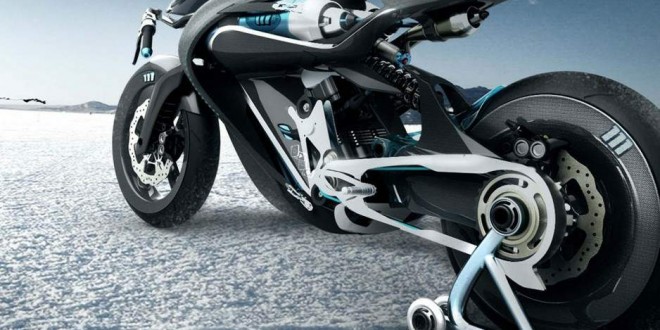
The Saline Bird Concept approaches motorcycle design from an unusual direction: compressed-air propulsion, a carbon-fiber frame, and a riding position inspired by speed skiers. Conceived for Les Triplettes de Bonneville, the project explores how a racing motorcycle could take shape when aerodynamics and an unconventional power source guide its design.
Created by five students at ISD in Valenciennes, France, for their 2010–2011 final project, the Saline Bird presents a distinctive vision of a purpose-built speed machine.
Three Air Tanks at the Heart of the Design
The proposed powertrain uses a compressed-air engine supplied by three tanks with a combined capacity of 27 liters. Those tanks are central to the motorcycle’s layout, making energy storage a defining part of its architecture.
The project identifies MDI as the engine partner, LUXFER as the air-tank partner, and BRM among its technical collaborators.
This unusual propulsion system gives the Saline Bird a compelling engineering premise. However, tank capacity alone does not establish range, power, or top speed. The concept’s appeal rests on its proposed arrangement and design thinking rather than documented performance figures.
A Carbon-Fiber Frame Organizes the Machine
The Saline Bird’s design places its technical components on a carbon-fiber frame. Instead of treating the chassis as something to conceal, the concept makes the supporting structure part of the motorcycle’s identity.
Packaging an engine, three air tanks, and a rider creates a different set of design priorities from those of a conventional motorcycle. The Saline Bird brings those elements together around a focused racing brief, with the rider’s posture playing an important role in the overall layout.
A Riding Position Borrowed from Speed Skiing
One of the project’s most distinctive ideas is its speed-skier-inspired riding position. The rider is intended to tuck tightly into the motorcycle, reducing the frontal profile presented to the air.
That approach treats the rider and machine as a single aerodynamic shape. The motorcycle’s proportions are therefore influenced as much by the human body as by its mechanical components.
It also gives the Saline Bird a clear purpose. The proposed posture prioritizes a compact racing tuck rather than the upright ergonomics associated with everyday riding.
Removable Leather Bodywork
The bodywork is another departure from convention. The designers proposed removable leather sections in place of traditional rigid panels, creating a flexible outer covering that could be fitted or removed.
The intention was to allow configurations for racing categories with or without bodywork. Adaptability becomes part of the design itself, rather than requiring an entirely separate exterior for each configuration.
This combination of a carbon-fiber structure and a flexible leather covering is perhaps the project’s most memorable material choice. Each serves a different role: one supports the machine, while the other changes its exterior form.
A Proposed Road-Oriented Version
The designers also envisioned a road-oriented configuration using a different handlebar arrangement. That proposal suggests how the riding position might be adapted beyond the original racing brief, although a handlebar change alone would not establish road legality or production readiness.
As a student concept, the Saline Bird is an exploration of possibilities. Its compressed-air powertrain, aerodynamic posture, and removable bodywork make it an intriguing example of motorcycle design built around a specific question: what happens when the familiar engine-and-fuel-tank formula no longer dictates the shape of the bike?