 Custom Motorcycles Baggers, Choppers, Cruisers, Street Bikes, Trikes, Oldskool Or Newskool Motorcycles
View Yamaha VMAX INFRARED by Jens von Brauck Photo Gallery
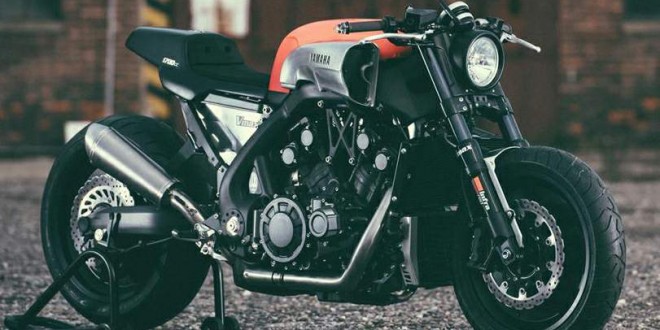
The Yamaha VMAX Infrared takes a machine known for visual mass and gives it a much leaner, more focused silhouette. Created by German designer Jens von Brauck, the build keeps the VMAX powerplant and chassis character at the centre while replacing much of the surrounding visual language with compact bodywork, exposed structure and a restrained racing palette.
A sharper shape for a heavy-hitting VMAX
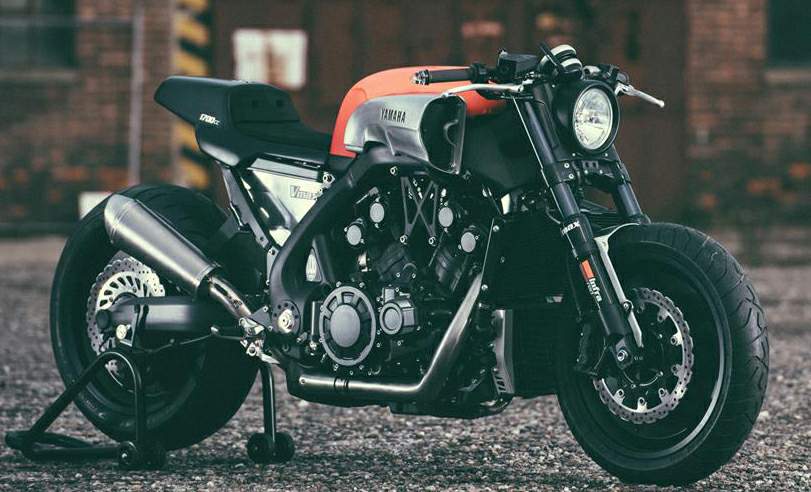
From the side, the change is immediate. The large original bodywork has given way to a short tail, a narrow seat unit and a clean, round headlight. That arrangement brings the motorcycle closer to a roadster or café racer without disguising its VMAX identity. The broad engine remains fully visible, and the substantial front and rear tyres preserve the bike’s muscular stance.
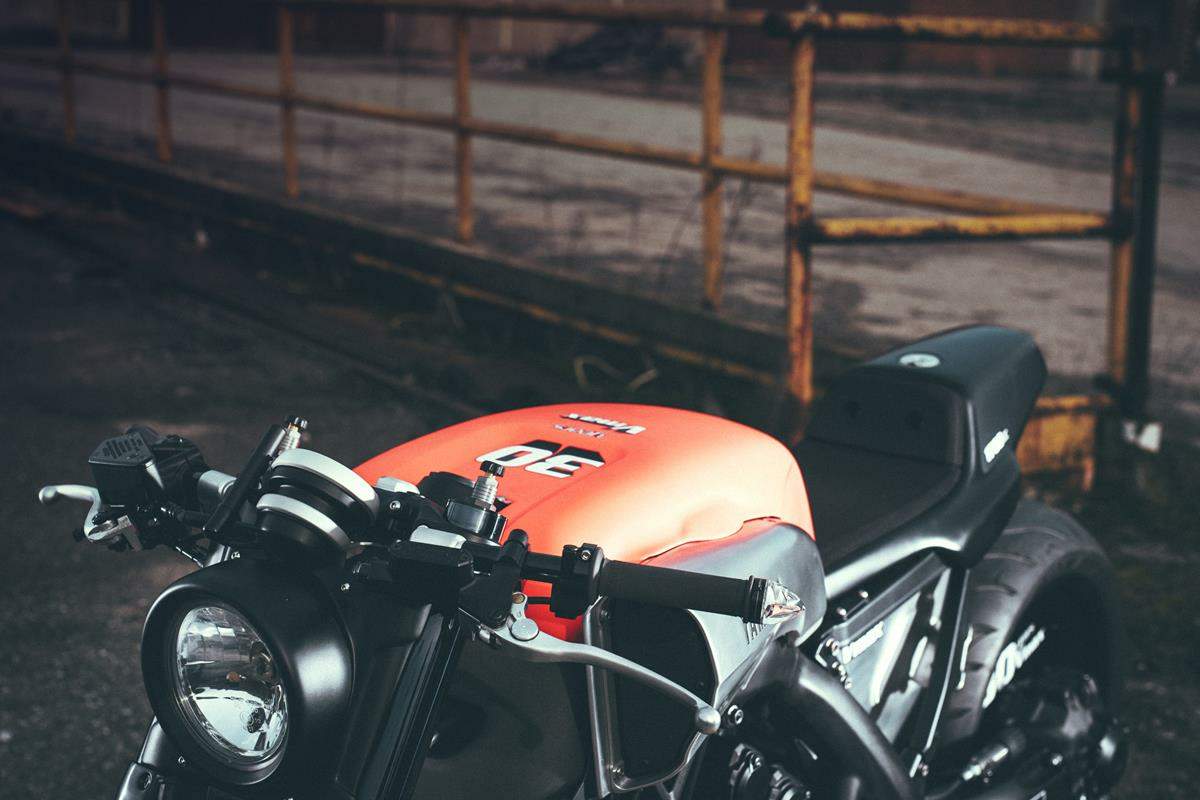
The red, silver and black paint scheme is described as a reference to Yamaha racing colours from the past. On the finished motorcycle, the bright tank section supplies the visual focus while the dark frame, engine and wheels keep the overall design controlled rather than ornate. The result is a custom bike that looks purposeful from a distance and considerably more intricate up close.
Aluminium, carbon and carefully exposed structure
Von Brauck’s approach was primarily a design exercise rather than an engine-development project. The source material reports no fundamental mechanical changes to the VMAX. Instead, the transformation comes through fabricated bodywork and the removal or reshaping of standard parts.
Several elements were made in-house, including the tank cover, headlight casing, aluminium subframe and carbon-fibre tail section. The tail also incorporates a secondary fuel tank, according to the supplied description. That combination of materials is visible in the contrast between the metallic side panels, dark composite surfaces and the structural members left open beneath the seat.
The details that preserve the VMAX connection
The air scoops are among the most distinctive features. They were reworked from units associated with the original 1980s VMAX, giving the modern custom a direct visual link to the model’s earlier form without simply reproducing its bodywork. Their angular surfaces sit neatly against the tank and frame, helping the bike retain a recognisable VMAX face even after the extensive redesign.
Café-racer influence appears in the lower, more compact handlebar arrangement, while the minimalist round headlight and shortened rear section push the bike toward a modern street tracker aesthetic. Motogadget and Autometer components provide the replacement instrumentation and signals, keeping the cockpit visually clean.
Performance hardware left on display
Rather than claiming a radically tuned engine, the Infrared makes its mechanical statement through presentation. The V4 is open to view, with the exhaust system contributing much of the visible drama. A 4-into-1 Termignoni system replaces the standard arrangement; any performance benefit is reported rather than independently verified here.
Infrared succeeds because it does not try to make the VMAX anonymous. Its compact tail, altered air scoops and hand-built surfaces change the proportions, but the engine, broad tyres and unmistakable central mass still define the motorcycle. It is a substantial redesign built around recognition, not a rejection of the original machine.
Source attribution: Autoevolution.com, as identified in the supplied material.
Photo Gallery