 Custom Motorcycles Baggers, Choppers, Cruisers, Street Bikes, Trikes, Oldskool Or Newskool Motorcycles

View Ducati Monster 1100 Evo “Rat Army” by TCD, Fitil DMC and GRHV Photo Gallery
The Ducati Monster 1100 Evo “Rat Army” turns the familiar Monster layout into a much sharper custom without hiding the mechanical structure that defines it. Built through a collaboration between Timokhin Custom Design, Fitil DMC and GRHV, the Moscow project combines a bright red trellis frame, a hand-formed aluminum tank and a compact, aggressively detailed riding position. The build was reported to have taken sixth place in the Freestyle class at the 2015 Moscow Custom & Tuning Show.
A Monster with a new silhouette
The most immediate change is the rear half of the motorcycle. The original frame was redesigned behind the main structure into a single, tightly drawn tail assembly. Its slim red tubes lead into a raised solo seat, while the tail light and indicators are integrated into the new rear section rather than left hanging from a conventional fender or bracket. That treatment gives the bike a cleaner outline and keeps attention on the exposed engine and suspension.
Above it sits a raw-finished aluminum fuel tank, shaped specifically for the project and topped with a different fuel cap. Its broad, slightly sculpted surfaces contrast with the tubular frame and black engine cases. The black seat uses punched leather over a custom aluminum base, adding texture without competing with the tank’s unpainted metal finish.
Chassis changes with a clear purpose
The standard rear arrangement was replaced by a single-sided swingarm sourced from a Ducati S4RS. The suspension installation was also reworked, with the rear unit hinged directly on the rear cylinder, which the source describes as taking a structural bearing role. In profile, the result exposes more of the wheel and makes the rear of the machine look considerably more technical.
At the front, the stock forks were black anodized and paired with upgraded calipers. The large black wheels, red rim detailing and wide performance-oriented tires give the Monster a planted stance, while raised adjustable clip-ons and new rear sets pull the riding position toward the cafe-racer brief. Rizoma grips and a compact Motogadget instrument complete the cockpit without abandoning the Ducati’s original electronic systems.
Engine character left visible
The engine itself was reportedly left internally unchanged. Instead, the build concentrates on presentation and supporting hardware: an STM dry clutch is openly displayed on the right side, the airbox was removed in favor of K&N high-flow pods, and the exhaust exits in a short, low pair beneath the engine. These choices leave the air-cooled twin visually dominant rather than burying it beneath bodywork.
A round LED headlight brings a classic Monster cue back into the front view, but the surrounding details are considerably more contemporary. The exposed wiring, compact gauge and adjustable controls reinforce the project’s central idea: preserve the modern motorcycle’s electronic convenience while giving the chassis and bodywork a much more individual shape.
Project credits
The original account credits Timokhin Custom Design, Fitil DMC and GRHV with the collaboration. It also lists photographs by Vasily Bobylev and cites Inazuma Cafe as its source.
Photo Gallery


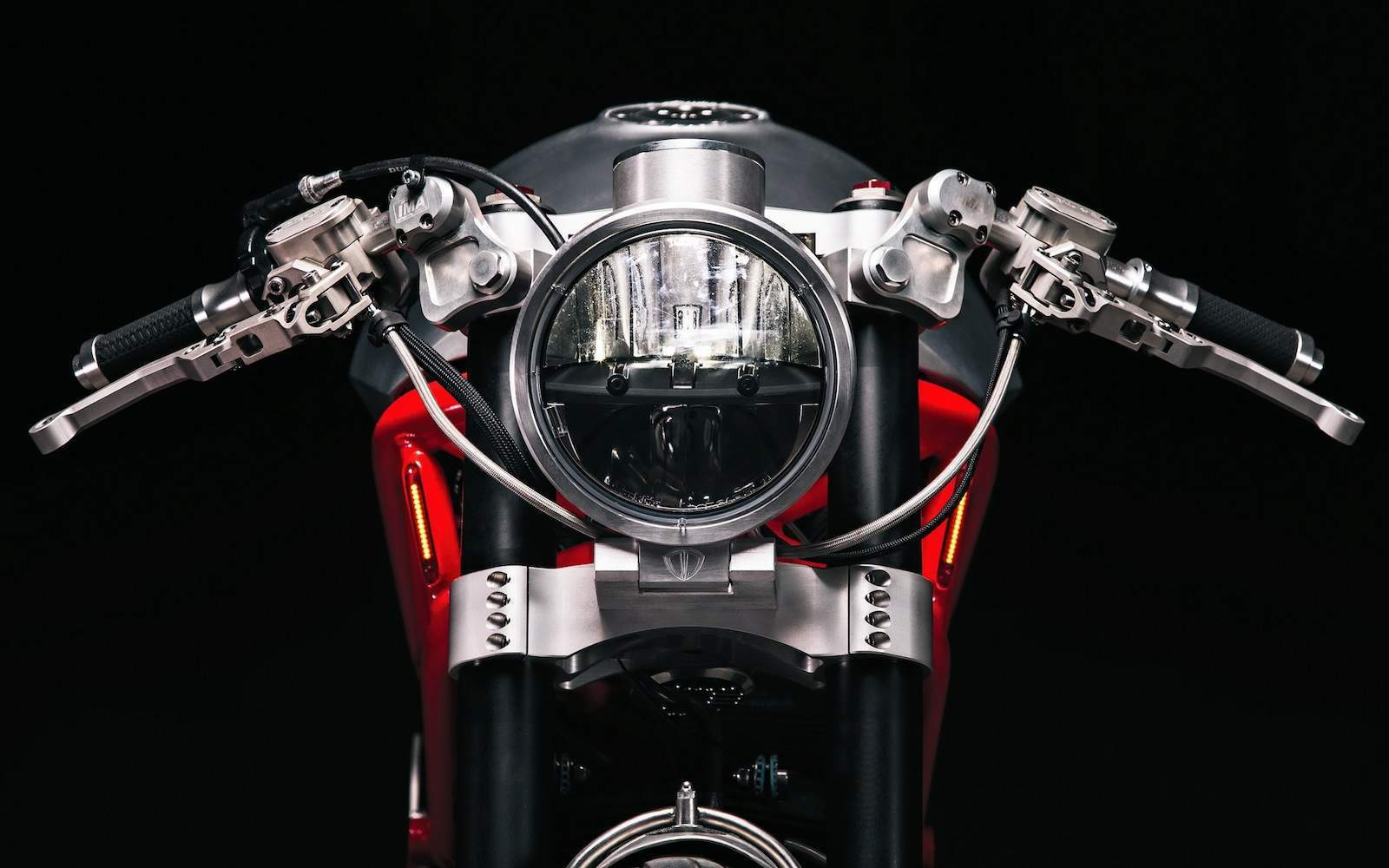

 The project was aimed to obtain a special bike inspired by the classic Ducati Monsters maintaining all the electronic facilities of the modern versions. The design is characterized by clean lines, based on the red frame, the new aluminum tank and the dry clutch. The original frame was fully redesigned in its rear end, obtaining a single structure. The indicators and tail light have been integrated into it.
The fuel tank has been hand made in aluminum, equipped with a new gas cap and finished with a layer of transparent lacquer. The swingarm has been replaced with a single sided arm of a S4RS. This has been integrated with the suspension unit, with the spring painted black, hinged directly on the rear cylinder to which has been given a structural bearing role.