 Custom Motorcycles Baggers, Choppers, Cruisers, Street Bikes, Trikes, Oldskool Or Newskool Motorcycles
View Officine GP Design’s Triumph Bonneville Custom Photo Gallery
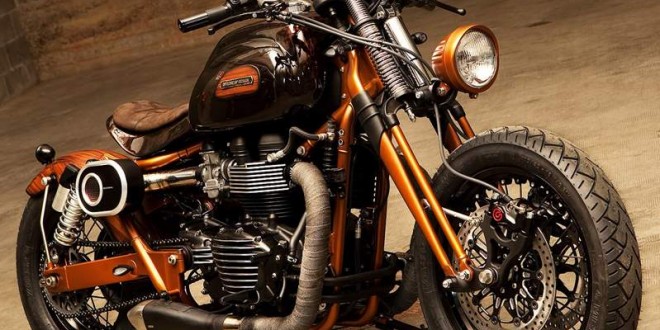
Officine GP Design’s Triumph Bonneville is a study in contrast: a dark copper tank and orange chassis sit above a classic parallel-twin engine, while a springer-style front end and wood rear fender push the bike far beyond its standard roadster origins. The result is a compact solo custom with a deliberately assembled mix of polished metal, leather, timber and modern braking hardware.
A new front-end identity
The most decisive change is at the front. The original telescopic fork has been replaced by a retro springer arrangement, with the headlight mounted low between the fork structure and the single gauge left prominently exposed above it. The twin spring elements and polished shock components give the front end its mechanical character instead of hiding the working parts behind a conventional fork.
A bare front wheel and broad handlebars keep the silhouette purposeful. The copper-colored fork and frame elements also connect visually with the tank and rear bodywork, making the chassis part of the bike’s visual language rather than a neutral support structure.
One-piece tank and solo cockpit
The fuel tank is the visual anchor. Its dark copper finish is shaped with pronounced side and upper bulges, giving the Bonneville a heavier, more sculptural profile than the donor motorcycle. The source describes the tank and seat base as a single aluminium piece, with the low solo seat integrated into the frame area. The visible leather upholstery adds a softer counterpoint to the tank’s reflective finish, but there is no provision for a passenger.
That compact riding area is matched by a repositioned intake and an oval Rizoma airbox. The airbox is especially effective as a design element: its circular intake detail breaks up the black side of the engine while keeping the exposed mechanical area visually ordered.
Timber, Brembo hardware and restrained lighting
The rear fender is made from wood panels, finished for a glossy, richly grained appearance. It is an unusually vulnerable material choice for a motorcycle’s rear end, yet it gives the tail a warmth that painted metal could not provide. The timber also echoes the warm copper tones without simply matching them.
At the other end of the specification, the braking system brings a distinctly modern note. Brembo calipers and drilled discs add visual precision to the front wheel, while piggyback-reservoir rear shocks, LED indicators and a compact tail light update the bike’s equipment without overwhelming its old-school theme. Wrapped exhaust headers and the blacked-out engine complete the contrast between crafted detail and working machinery.
The donor is described in the supplied material as possibly a Triumph America or Speedmaster rather than being conclusively identified. Whatever the starting point, this completed Officine GP Design machine is not a bolt-on conversion: its proportions, bodywork and suspension layout were rethought as one coherent custom.
Source attribution: Autoevolution, as credited in the supplied material.
Photo Gallery