 Custom Motorcycles Baggers, Choppers, Cruisers, Street Bikes, Trikes, Oldskool Or Newskool Motorcycles


View BMW Motorrad Vision Next 100: A Motorcycle Without a Conventional Frame Photo Gallery
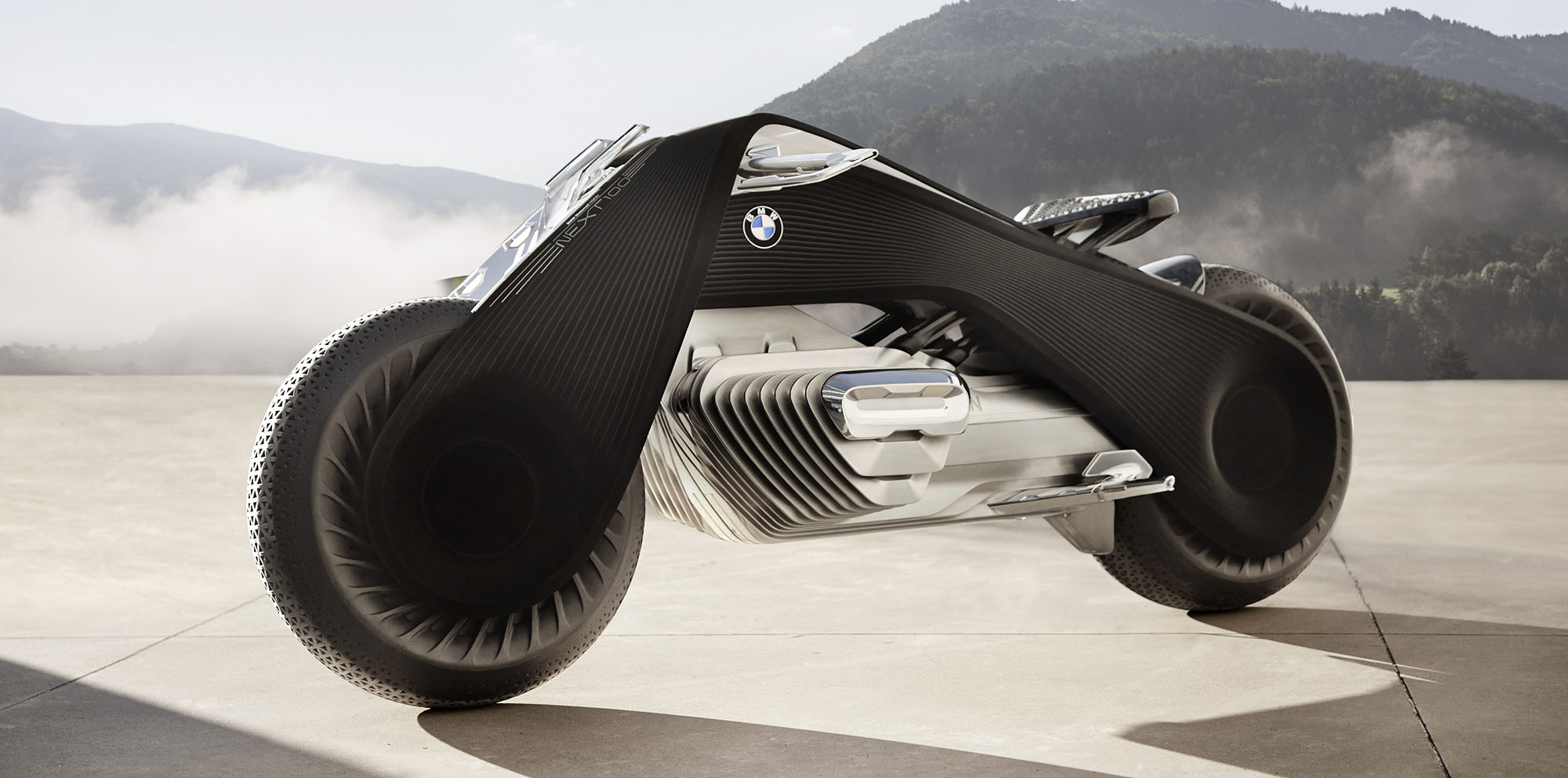
The BMW Motorrad Vision Next 100 does not try to refine the familiar motorcycle silhouette. Its broad black body structure stretches from the front wheel to the tail, leaving the mechanical-looking centre section exposed and making the frame itself the defining visual feature. It is a design study from BMW Motorrad, created for the company’s centenary celebrations rather than presented as a conventional production model.
A frame that becomes the fairing
BMW’s concept places a deep, sculpted structure around the rider instead of using a separate fairing mounted ahead of a visible frame. In the supplied views, the side panels form a continuous arch over the front and rear wheels, while the narrow rider area sits inside that shape. BMW said the arrangement was intended to provide protection from wind and rain comparable to a full-size fairing.
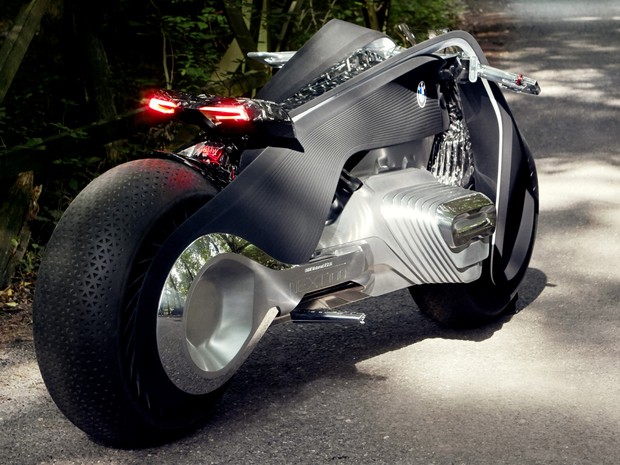
That choice gives the Vision Next 100 an unusually clean profile. There is no obvious tank in the usual sense, no exposed conventional fork, and little visual separation between chassis and bodywork. The result looks closer to a single engineered shell than a motorcycle assembled from distinct components.
Classic reference, radically different proportions
The concept is described as being inspired by BMW’s first motorcycle, the 1923 R32. The historical reference is subtle rather than literal: the Vision Next 100 retains a strong central mechanical presence and a horizontally opposed visual theme, but surrounds it with smooth, sharply tapered surfaces and oversized-looking enclosed wheels.
Those wheel-and-body proportions dominate the design. The large, dark tyres contrast with the silver central assembly, while the narrow seat and low tail keep the rider visually close to the machine. From the rear, slim red lamps and the exposed lower structure provide the few conventional motorcycle cues that remain.
A rider-focused design exercise
BMW’s presentation imagery shows the rider in a forward, compact position, with the hands placed low over the front section. The concept’s surfaces appear deliberately uncluttered, with the BMW roundel and a few bright metallic details standing out against the ribbed black bodywork. This restraint makes the central mechanical forms more important: they are not hidden behind decorative panels, even though the surrounding structure is highly stylised.
The Vision Next 100 should therefore be read as a statement about possible motorcycle design rather than a specification sheet. The supplied material does not establish production plans, performance figures, powertrain details or a road-ready version. Its value is in the questions it raises about protection, chassis visibility and how much of a motorcycle’s familiar architecture needs to remain visible.
BMW’s centenary concept
BMW Motorrad presented the Vision Next 100 as the fourth vehicle in a series of centenary concepts. The company’s presentation video remains the clearest source for the original reveal and design intent: BMW Motorrad Vision Next 100 presentation.
Photo Gallery